Why 2026 Is the Year AI Agents Stop Being Optional
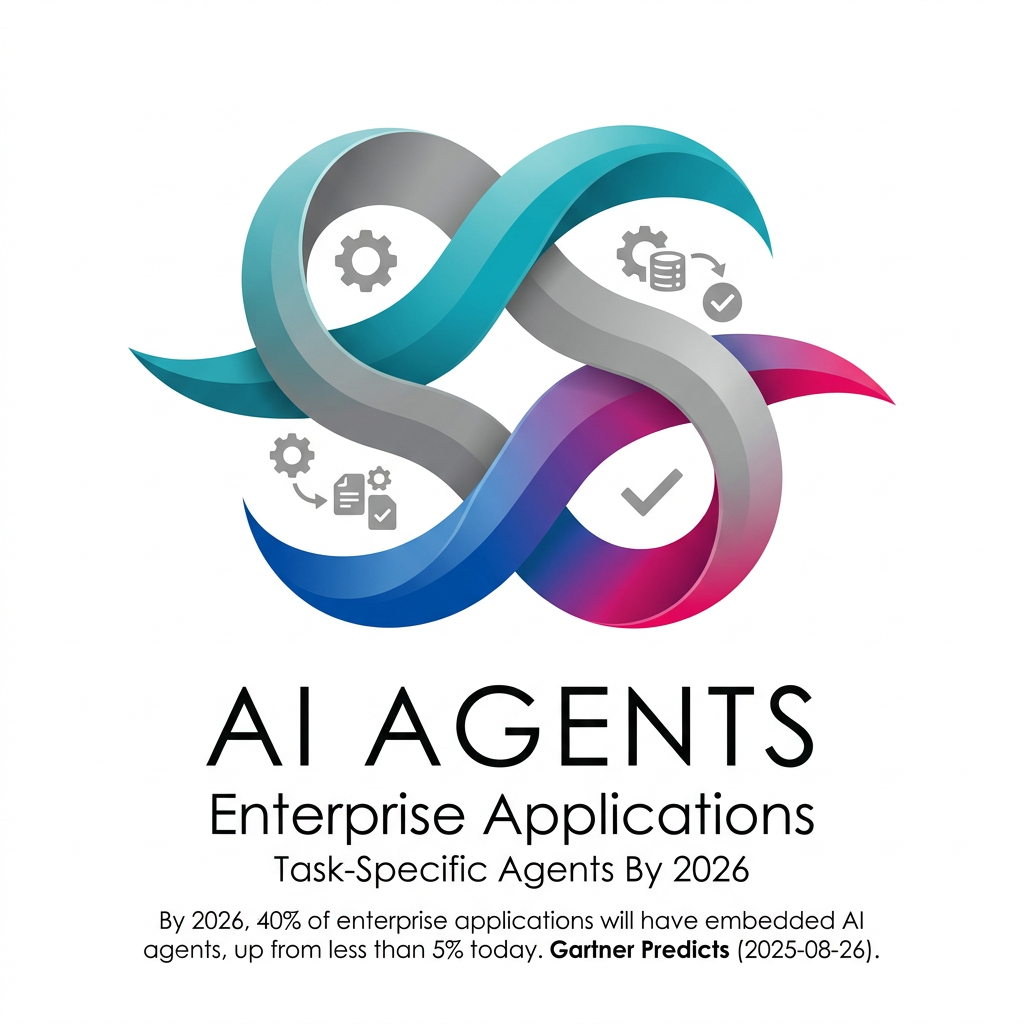
I've been watching something shift in how businesses operate. It's not dramatic, and it won't arrive with fanfare, but by the end of 2026, 40% of enterprise applications will have AI agents embedded in them. That's up from less than 5% today. The gap between businesses that adopt this technology and those that don't is widening faster than most people realise.
Here's what I mean by AI agents. I'm not talking about chatbots that answer customer queries or automation tools that follow rigid if-this-then-that rules. AI agents can interpret instructions, make decisions when conditions change, and execute multi-step processes without constant human supervision. They don't break when they encounter an exception — they adapt.
This matters because the businesses I work with are time-poor. They're running around managing clients, chasing invoices, keeping up with compliance deadlines, and trying to grow simultaneously. The idea that technology could handle complex tasks autonomously — not just speed up manual work, but actually think through problems — changes what's possible.
The Difference Between Automation and Intelligence
Most business owners have encountered automation. You set up a rule: when an invoice is overdue by 30 days, send a reminder email. It works until something changes. The client emails to say they're paying next week, or the invoice amount was wrong, or they've already paid but it hasn't cleared. Traditional automation doesn't know what to do with ambiguity.
AI agents handle ambiguity differently. They can read the client's email, understand the context, check the payment status across your accounting system, and decide whether to send another reminder, escalate to you, or mark the issue as resolved. They don't need you to anticipate every possible scenario and programme a response.
Think of it this way: a standard chatbot acts like someone handing you information from a filing cabinet. An AI agent acts like your accountant — actively working through problems and executing solutions. That's the fundamental shift.
Where AI Agents Deliver Immediate Returns
The businesses gaining the most from AI agents in 2026 aren't the ones with the biggest budgets. They're the ones that identified one repetitive, time-consuming workflow and let an AI agent handle it. Then they expanded from there.
In finance and accounting, the returns are measurable. AI agents can scan ledgers, flag errors, and spot unusual transactions that might otherwise go unnoticed. Businesses report accelerating their month-end close times by 30-50%. For small accounting practices like ours, that means handling more clients without burning out the team.
Payment reconciliation is another area where AI agents prove their value. They learn from historical patterns to match payments faster — up to 90% automation — and more accurately, with accuracy rates as high as 99%. When you're managing dozens of clients and hundreds of transactions monthly, those hours add up.
QuickBooks has started embedding AI agents that automate invoice reminders, reconcile payments, generate cash-flow insights, and flag anomalies. Small businesses using these tools report saving up to 12 hours monthly. That's not abstract productivity — that's half a week of admin work eliminated.
The Talent Crunch Makes This Urgent
Here's something most business owners don't know: 75% of CPAs are set to retire within 15 years. The accounting profession is facing a talent shortage that won't resolve quickly. Training new accountants takes years, and demand for financial expertise is growing, not shrinking.
AI agents don't replace accountants — they handle the repetitive, process-heavy work that drains time and energy. This frees qualified professionals to focus on strategy, analysis, and decision-making. For small practices, it means you can grow your client base without hiring proportionally more staff.
I've seen this firsthand. When we invested in cloud accounting software and started using AI-assisted tools, we could take on clients we previously wouldn't have had capacity for. The technology handles compliance tasks, data entry, and routine queries. We focus on the conversations that actually help businesses make better decisions.
The 80/20 Reality of Implementation
Technology delivers about 20% of an initiative's value. The other 80% comes from redesigning how work gets done. This aligns with how I've always approached client relationships — don't overcomplicate it, just get started with one workflow and expand from there.
The businesses I've watched struggle with AI adoption are the ones that try to transform everything simultaneously. They buy expensive software, attempt to automate ten processes at once, and overwhelm their team. The ones that succeed pick one specific task — invoice reminders, payment matching, expense categorisation — and let the AI agent prove its value there first.
Once your team sees the technology working, adoption becomes natural. People stop resisting and start asking what else can be automated. That's when the real productivity gains compound.
The Cost Barrier Is Lower Than You Think
When I mention AI agents to clients, the first question is usually about cost. They assume this technology requires massive investment or technical expertise. It doesn't.
Basic AI plans typically cost between £0 and £30 monthly. That's less than most businesses spend on a single software subscription. You don't need a technical team to implement these tools — most integrate directly with the accounting software you're already using.
For context, Telus deployed AI agents across 57,000 team members, and each interaction saves 40 minutes on average. Suzano developed an AI agent that reduced query response time by 95% among 50,000 employees. These aren't tech companies — they're businesses that recognised the value and started building.
What This Means for How We Work
By 2028, 38% of organisations will have AI agents working alongside human teams. This isn't a distant future scenario — it's happening now. The question isn't whether AI agents will become standard, but whether your business will adopt them early enough to benefit from the competitive advantage.
I've always believed in giving clients control back. When businesses come to us feeling restricted or intimidated by their previous accountant, we restore their autonomy. AI agents extend that philosophy — they give business owners control over their time by handling the tasks that drain energy without adding value.
The businesses that thrive in 2026 won't be the ones with the most sophisticated technology. They'll be the ones that identified where their time was being wasted and deployed AI agents to reclaim it. They'll be the ones that started small, proved the value, and scaled intelligently.
The Practical Entry Point
If you're running a small business and wondering where to start, look at your most repetitive administrative tasks. What takes hours each week but doesn't require complex decision-making? Invoice reminders, payment reconciliation, expense categorisation, compliance deadline tracking — these are ideal starting points.
Choose one. Find an AI agent designed for that specific task. Test it for a month. Measure the time saved. If it works, expand to the next workflow. If it doesn't, try a different tool or approach.
The barrier to entry is lower than most business owners think. You don't need a massive budget or technical team to benefit. You need clarity about where your time is going and willingness to let technology handle the repetitive work.
The Human Element Remains Central
AI agents are designed to enhance human capability, not replace it. Accountants can focus on strategy, analysis, and decision-making whilst AI handles repetitive, process-heavy work. This is about giving your clients control back — just like we do when we take on their compliance burden.
I've been in accounting since leaving school. I've watched the profession transform from handwritten ledgers to cloud software. Every technological shift creates anxiety about jobs being eliminated. What actually happens is that the nature of the work changes. The tedious parts get automated, and the valuable parts — the human judgement, the client relationships, the strategic thinking — become more important.
AI agents accelerate that shift. They don't eliminate the need for accountants. They eliminate the need for accountants to spend hours on data entry and routine processing. That's a good thing.
What Happens If You Wait
The businesses that delay AI adoption won't collapse overnight. They'll just find themselves working harder for the same results whilst their competitors work smarter. They'll struggle to compete on price because their cost structure includes manual labour for tasks that others have automated. They'll lose talented staff who leave for firms using modern tools.
I've seen this pattern before. When cloud accounting software emerged, some practices resisted. They stuck with desktop systems and manual processes because that's how they'd always done things. Those practices either adapted eventually or lost clients to firms that offered faster service and better visibility.
AI agents represent the same inflection point. The technology is here, it works, and it's accessible. The question is whether you'll adopt it proactively or reactively.
The Honest Assessment
I'm not claiming AI agents solve every business problem. They don't. They won't fix poor pricing strategy, weak client relationships, or fundamental business model issues. What they do is eliminate the time drain of repetitive administrative work so you can focus on the things that actually drive growth.
For small businesses, that distinction matters. You don't have unlimited resources or staff. Every hour spent on manual data entry or routine compliance tasks is an hour not spent serving clients or developing your business. AI agents give you those hours back.
The businesses I work with are practical. They want straight talk about what works and what doesn't. AI agents work. They save measurable time, reduce errors, and free up capacity. The implementation isn't complicated, the cost isn't prohibitive, and the returns are tangible.
Moving Forward
If you're reading this and thinking about whether AI agents make sense for your business, start with one question: where is your time going that adds no value? That's your entry point.
The technology exists to handle those tasks. The barrier to adoption is lower than you think. The businesses that start building now will have a significant advantage by the end of 2026 — not because they're more sophisticated, but because they recognised the pattern early and acted on it.
I've always believed in helping clients without the nonsense. This is that philosophy applied to technology. Don't overcomplicate it. Identify one workflow, deploy one AI agent, measure the results, and expand from there.
What's the one task draining your time right now that could be automated?